
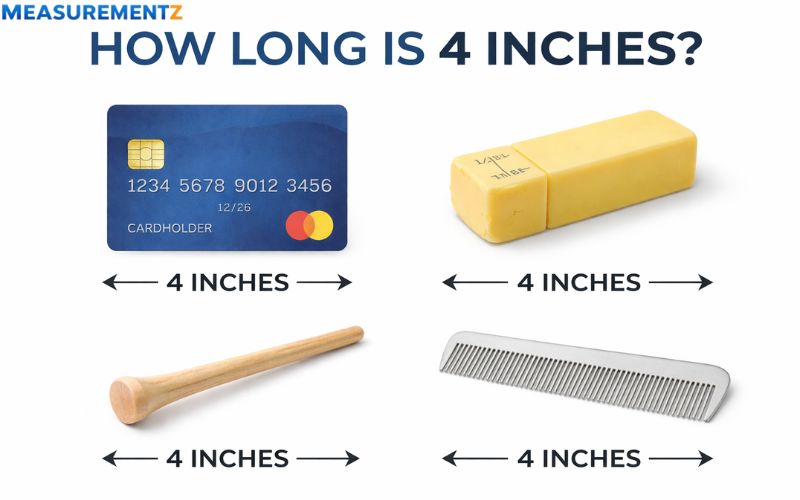
Four inches is a small but widely used measurement that appears in daily life more often than many people realize. It shows up when checking product dimensions, comparing household items, estimating space, or working on small projects. While rulers and tape measures provide accuracy, people often rely on familiar objects to judge size quickly.
Four inches equals 10.16 centimeters and represents one-third of a foot. On its own, that number may feel abstract. When compared with items people already recognize and handle regularly, the length becomes easier to picture and remember. Visual references remove guesswork and help prevent mistakes, especially when exact tools are not available.
Below are 14 common items that closely match or help visualize a 4-inch length, each explained clearly to build a reliable sense of scale.
| Unit | Converted Value |
|---|---|
| Feet | 0.33 ft |
| Centimeters | 10.16 cm |
| Millimeters | 101.6 mm |
| Meters | 0.102 m |
How Big Is 4 Inches?
Four inches is a small but tangible length that can be easier to understand when compared to everyday objects. In metric terms, 4 inches equals 10.16 centimeters or just over 0.1 meters. This is roughly the width of a standard smartphone, the length of a credit card’s short side, or the size of a typical adult palm from the base to the first knuckle of the fingers.
In practical terms, 4 inches is about the height of a standard coffee mug, or the diameter of a small apple. It is also one-third of a foot, which makes it useful for quick estimations when measuring small items at home or in the office. Visualizing 4 inches alongside objects you encounter daily makes it much easier to gauge length accurately without relying solely on rulers or tape measures.
1. Credit Card Length (Very Close Reference)
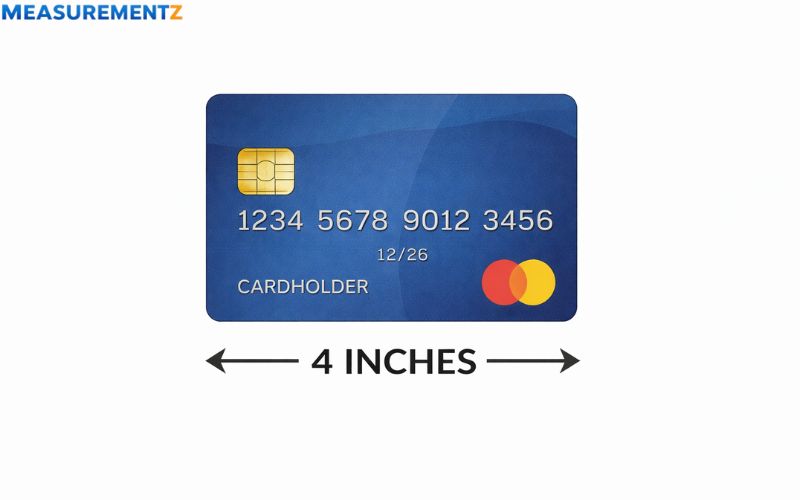
A standard credit or debit card measures 3.37 inches in length, making it slightly shorter than 4 inches. Despite the difference, it remains one of the most practical size references because of how often it is used.
When holding a card, adding a small amount—roughly the width of a fingertip—brings the length close to 4 inches. The straight edges and firm structure make it easy to compare visually with other objects.
This reference is especially helpful for online shopping. Many small items, such as wallet accessories, phone mounts, and compact tools, fall into this size range. Using a credit card as a baseline helps estimate whether an item will fit comfortably in a pocket, bag, or drawer.
2. Standard Golf Tee
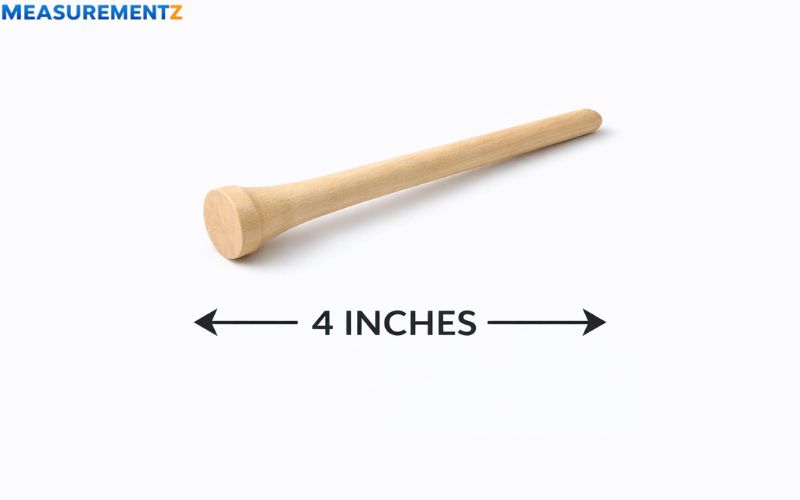
A traditional golf tee measures approximately 4 inches long, making it one of the most accurate everyday examples of this measurement.
Golf tees are manufactured to consistent dimensions, which adds to their reliability as a reference. Their slim shape makes the length stand out clearly from top to bottom.
Even outside a golf setting, tees are commonly seen in sports stores, garages, and homes. Holding one provides an immediate and precise sense of what 4 inches looks like in real life.
3. Width of an Adult Palm
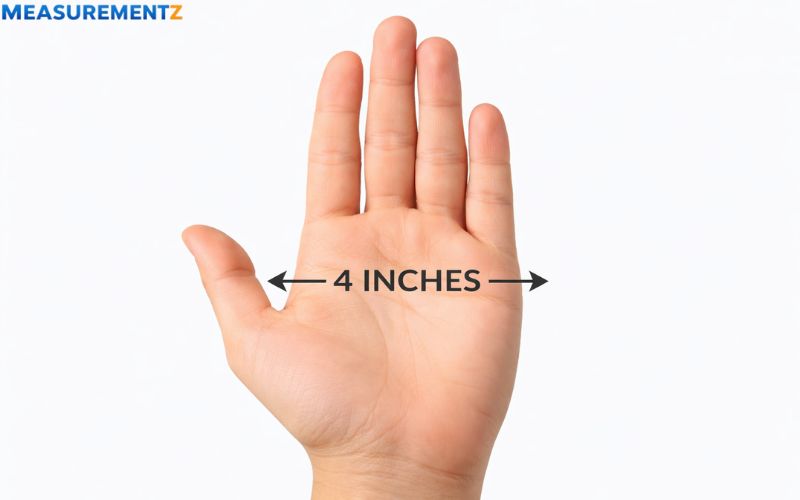
The width of an adult palm, measured across the hand without the thumb, is around 4 inches for many people.
While hand size varies slightly, this estimate remains fairly consistent for average adults. Because hands are always available, this reference is commonly used for quick checks when no measuring tools are nearby.
Placing the palm flat against an object or surface gives a fast and reasonably accurate idea of the 4-inch range. This method works well for spacing, alignment, and general size comparison.
4. Small Smartphone Screen (Diagonal Measurement)
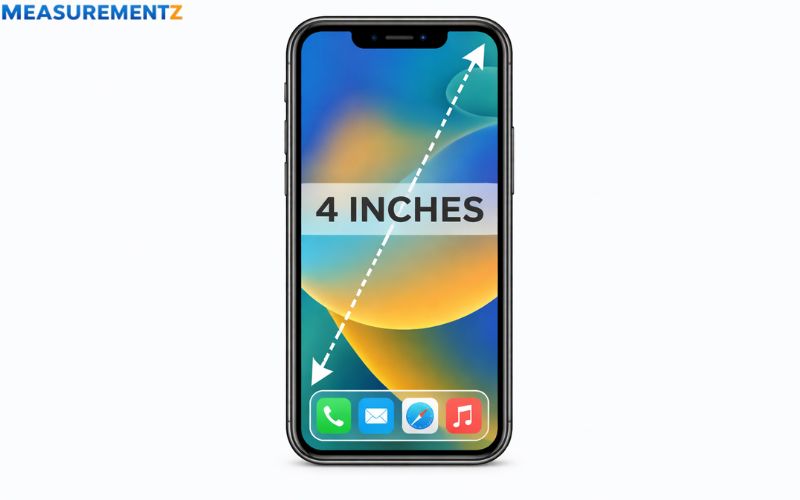
Compact smartphones, particularly older models, often feature screens close to 4 inches when measured diagonally.
The diagonal measurement runs from one corner of the screen to the opposite corner. Phones of this size were designed for easy one-hand use and portability.
If you recall a phone that fit easily in the palm without stretching the thumb, that screen size gives a strong visual reference for 4 inches. It is noticeable in size but not bulky.
5. Half a Stick of Butter
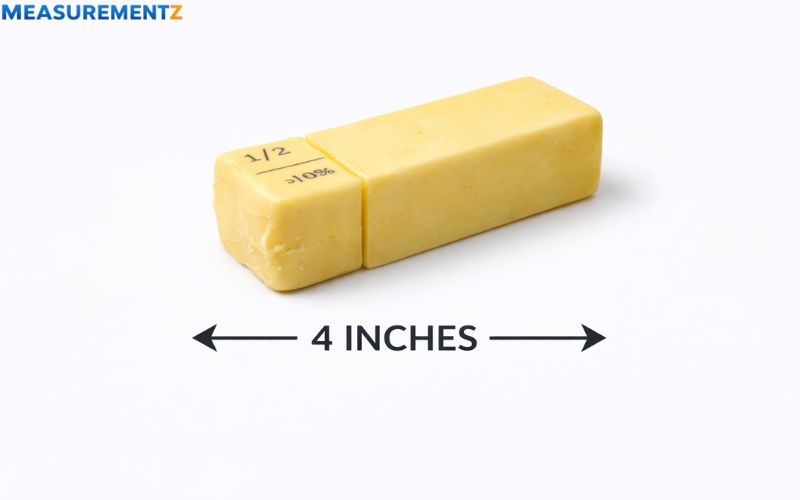
In the United States, a full stick of butter measures 8 inches, making half a stick exactly 4 inches long.
Butter packaging often includes measurement lines, which makes this reference especially precise. Many recipes require cutting butter in half, reinforcing familiarity with this length.
From one end of the butter to the midpoint, the size is clear and easy to picture. This example is particularly useful for people who cook or bake regularly.
6. Larger USB Flash Drive
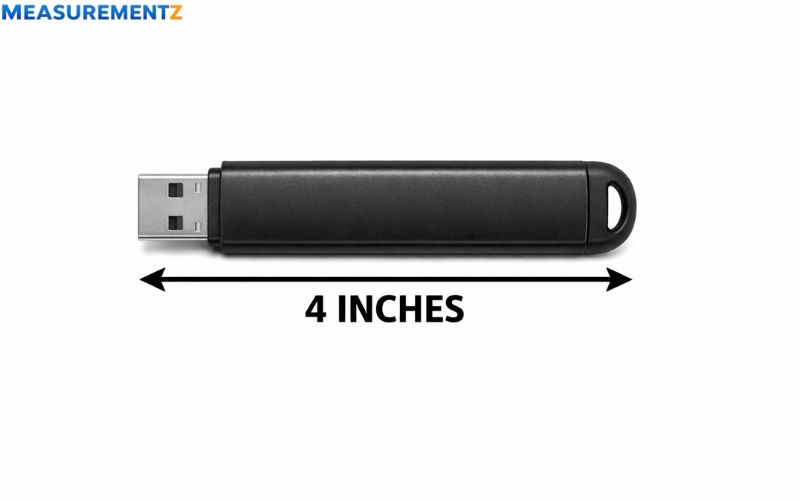
USB flash drives vary in size, but many longer models measure close to 4 inches from end to end.
These devices are rectangular and rigid, which makes their length easy to compare visually. The presence of a connector at one end also helps define the full measurement clearly.
Because flash drives are common in offices, schools, and homes, they provide a familiar and convenient size reference.
7. Pocket Comb
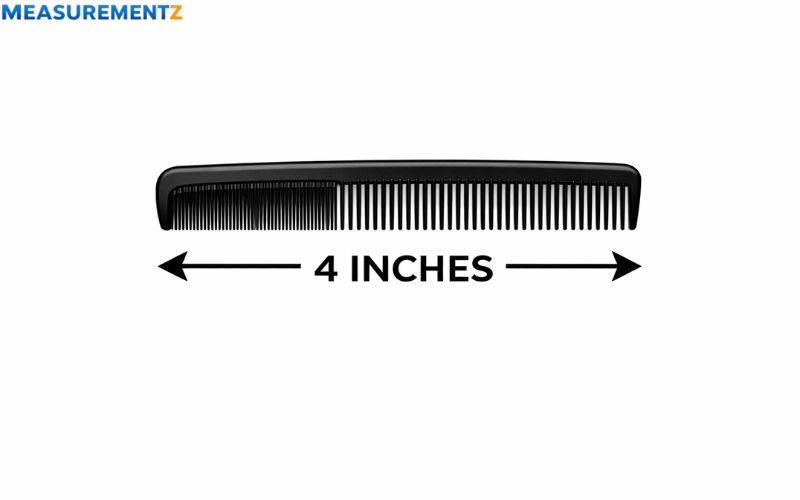
Most pocket combs are designed to be around 4 inches long, allowing them to remain portable while still being practical.
This length ensures the comb fits easily in pockets, purses, or travel kits. The straight, narrow design makes it simple to judge the length by sight.
If you have ever carried a folding or travel comb, you already have a clear idea of how long 4 inches feels in the hand.
Related Post: 15 Common Things That Are Around 5 Inches Long
8. Standard Crayon (Unused)
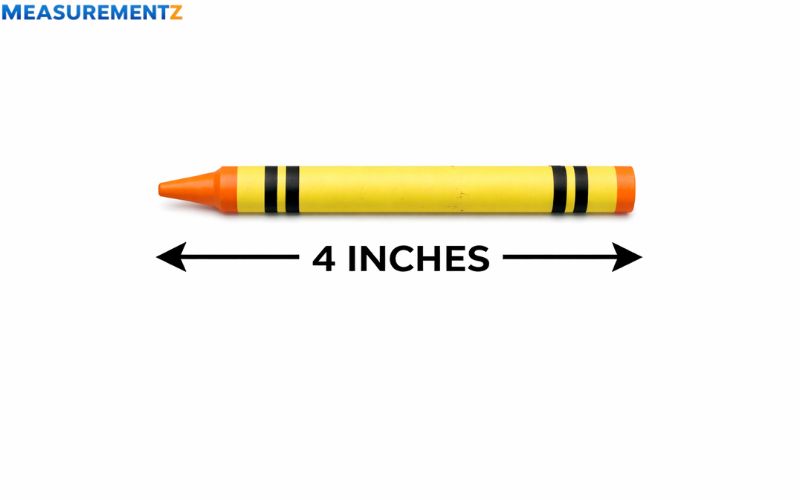
A new crayon typically measures between 3.6 and 4 inches in length.
Crayons are familiar objects with a simple cylindrical shape. When unused, their full length is visible, making them easy to compare.
Because crayons are often handled by children and adults alike, this reference works well when explaining size in a simple, relatable way.
9. Large Paperclip When Straightened
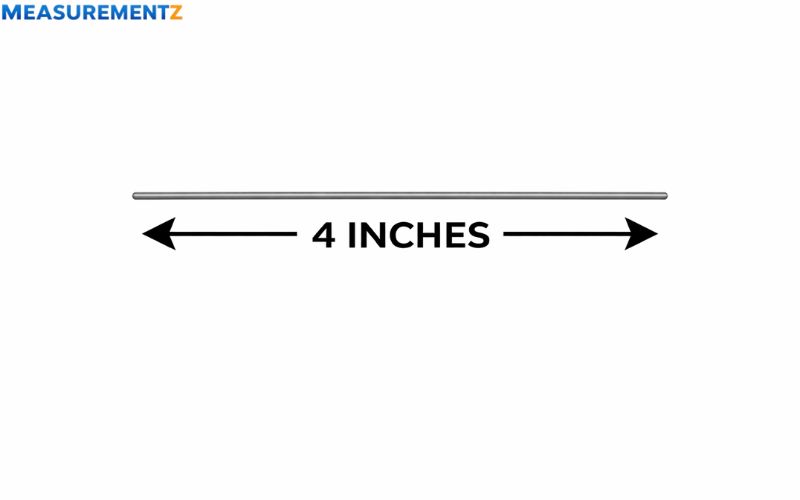
A large paperclip, once fully straightened, measures close to 4 inches.
This example highlights how shape can affect perception. While bent, a paperclip looks small. When straightened, the total length becomes much more apparent.
It serves as a reminder that length does not always look the same depending on how an object is formed.
10. Central Control Section of a TV Remote
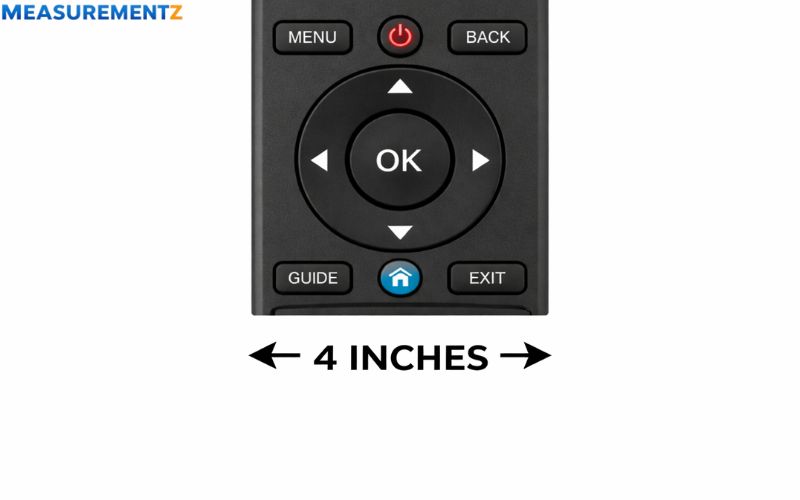
The main button area on many TV remotes measures around 4 inches from top to bottom.
This section is designed to sit comfortably under the thumb during use. Because remotes are built for ease of handling, this portion naturally falls within the 4-inch range.
Looking at the navigation and control buttons together provides a familiar and practical visual reference.
11. Short Side of a Pocket Notepad
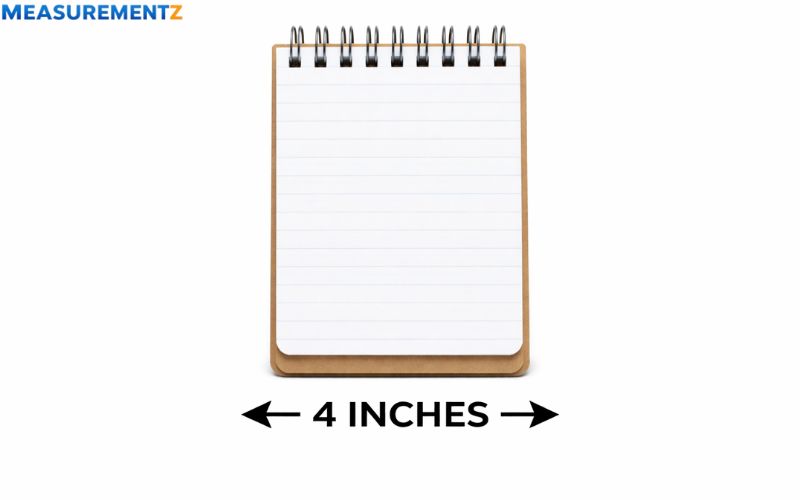
Many pocket-sized notepads measure about 4 inches across on the shorter side.
These pads are designed for convenience, fitting easily into bags or coat pockets. Their flat shape and straight edges make the measurement easy to judge.
This reference is useful when estimating the width of small flat objects such as envelopes, labels, or printed materials.
Related Post: 15 Common Things That Are 6 Inches Long
12. Teaspoon Handle
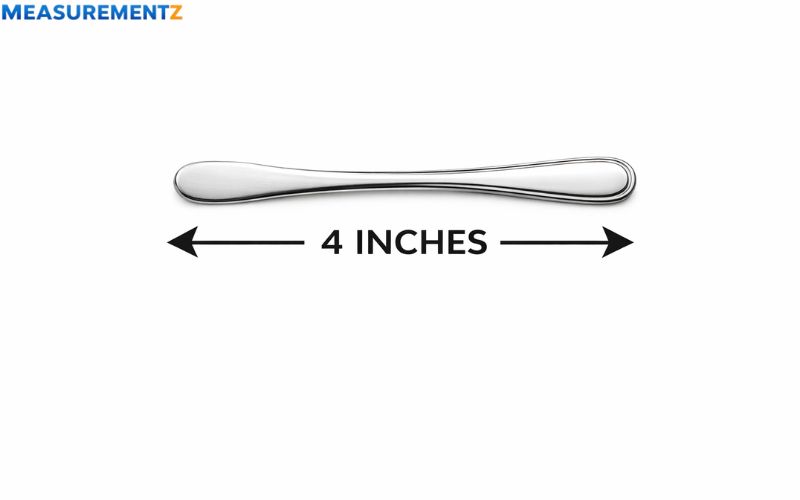
The handle of a standard teaspoon typically measures around 4 inches from the end to the start of the bowl.
This length allows for a comfortable grip while stirring or serving. Because teaspoons are everyday kitchen items, the size is easy to recall.
Holding a teaspoon naturally places this measurement directly in hand, making it a reliable reference.
13. Matchbox Length
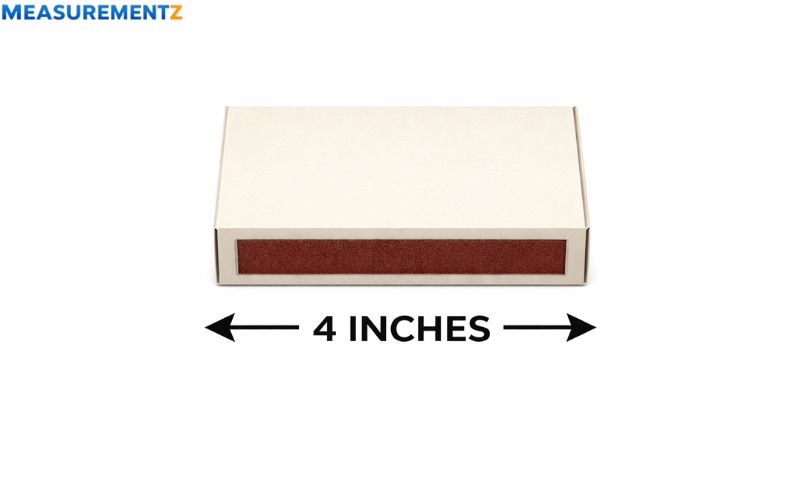
A traditional matchbox measures roughly 4 inches long.
Matchboxes are compact, rectangular, and easy to visualize. Their size is designed to hold matches securely while remaining easy to carry.
From one end to the other, the length provides a straightforward example of the 4-inch range.
14. Soda Can Height (Slightly Taller)
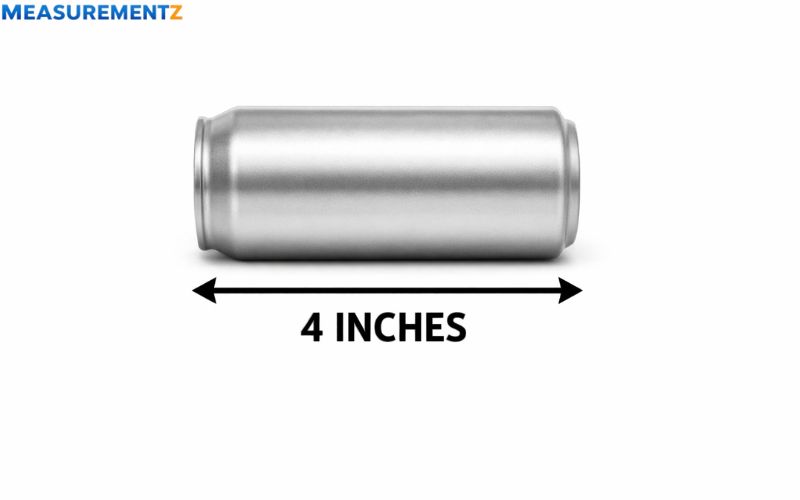
A standard soda can measures about 4.8 inches tall, which makes it slightly taller than 4 inches.
Although not exact, it remains a helpful comparison due to how familiar soda cans are. Visualizing a can and removing a small portion from the top brings the height closer to 4 inches.
This reference works well when estimating size quickly without tools.
FAQs
What does 4 inches look like in real life?
Four inches is about the width of an adult palm, the length of a standard golf tee, or half a stick of butter. These familiar items make the size easy to picture without using a ruler.
How many centimeters is 4 inches?
Four inches equals 10.16 centimeters. This conversion is useful when comparing measurements between the U.S. customary system and the metric system.
Is 4 inches longer than a credit card?
Yes, four inches is slightly longer than a standard credit card. A credit card measures about 3.37 inches, making it just under the 4-inch length.
Can I measure 4 inches without a ruler?
Yes, you can estimate four inches using common objects such as a golf tee, the width of your palm, or half a stick of butter. These references provide a close approximation.
Is 4 inches considered small?
Four inches is considered a short length. It is commonly used for small household items, tools, packaging dimensions, and compact electronic accessories.
How does 4 inches compare to a soda can?
A standard soda can is about 4.8 inches tall, which is slightly taller than four inches. Removing a small portion from the top of the can gives a close visual match.
Why is knowing the size of 4 inches useful?
Knowing the size of four inches helps with shopping online, checking product fit, planning small projects, and estimating object dimensions without measuring tools.
Final Thoughts
Four inches may seem small, but it plays an important role in daily measurements. Knowing how to picture this length helps reduce errors, saves time, and improves accuracy when comparing or selecting items.
By connecting measurements to familiar objects, size estimation becomes easier and more reliable. Once these references are clear, identifying 4 inches becomes second nature, even without a ruler.
Looking to Measure More Inches? Visit Our Inch Measurement Tool
