
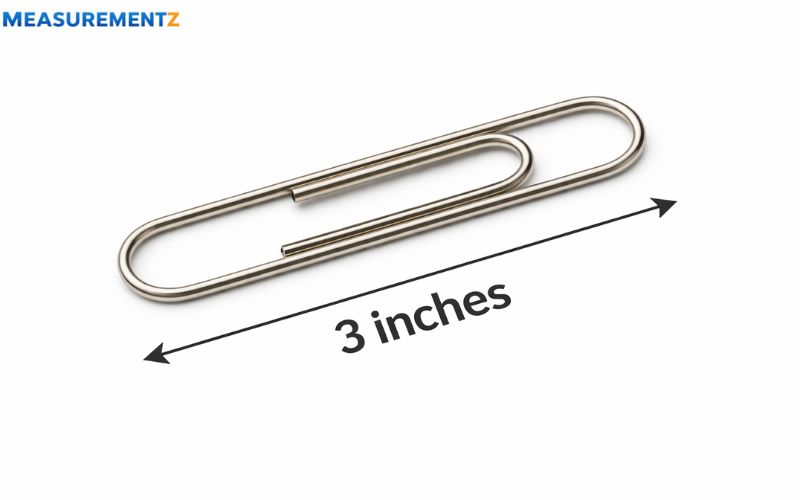
The measurement 3 inches is used far more often than most people realize. It appears in product specifications, packaging dimensions, household tools, accessories, electronics, and small construction or repair tasks. Many sizing mistakes happen because people underestimate or overestimate what 3 inches actually looks like in real life.
Three inches equals 7.62 centimeters in the metric system. On a ruler, it spans from the zero mark to the number three. While it is not a large measurement, it is large enough to be clearly visible, easy to handle, and highly functional across a wide range of everyday objects.
Below are 13 common things that are about 3 inches long. Each item is explained in depth, including where it is commonly used, why that size is chosen, and how it helps accurately judge the length of 3 inches in daily situations. This detailed approach makes the measurement easier to recognize, remember, and apply.
13 Common Things That Are About 3 Inches Long
| No. | Item Name |
| 1 | Standard Credit Card Width |
| 2 | Large Paper Clip (Unfolded) |
| 3 | Adult Thumb Length |
| 4 | Three Matchsticks Aligned |
| 5 | Standard USB Flash Drive |
| 6 | Small Pocket Knife (Closed) |
| 7 | Teaspoon Handle |
| 8 | Golf Tee |
| 9 | Small Decorative or Birthday Candle |
| 10 | Bottle Cap Width (Laid Flat) |
| 11 | Three Coins Side by Side |
| 12 | Smartphone Camera Module Area |
| 13 | Ruler Mark from 0 to 3 Inches |
1. Standard Credit Card Width
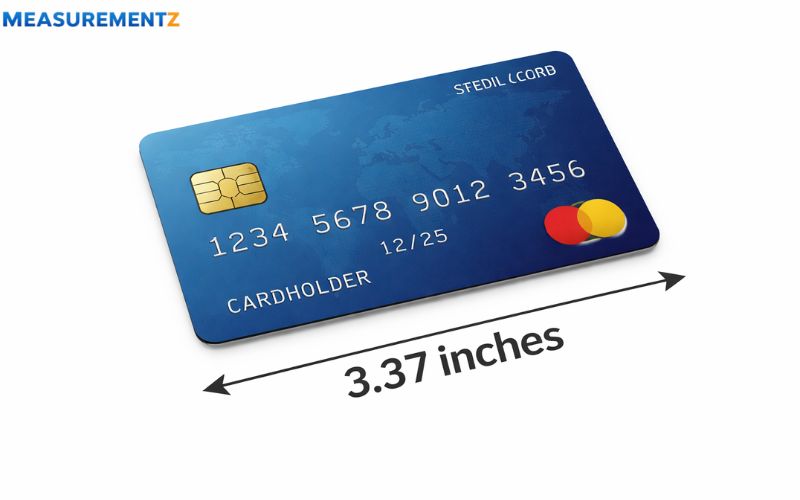
A standard credit or debit card measures approximately 3 inches wide. This dimension is governed by international standards, which means the width remains consistent regardless of bank, country, or card issuer. Because of this strict standardization, credit cards provide one of the most reliable everyday references for judging 3 inches.
This measurement directly influences product design. Wallets, card holders, phone cases with card slots, ATMs, vending machines, parking meters, and payment terminals are all built to accommodate this exact width. If a product claims to hold a “card-sized” item, it is almost always engineered around a 3-inch dimension.
Using a credit card as a measuring reference is practical because it is flat, rigid, and easy to align against edges or openings. It allows quick checks when estimating whether something will fit into a narrow slot, pouch, or holder. Since most people carry a card daily, this reference is always available and highly dependable.
This width is also useful when evaluating product listings online. Many sellers describe small items as “credit-card sized” without providing exact dimensions. Knowing that this equals roughly 3 inches helps prevent ordering items that are smaller or larger than expected. It also helps when comparing storage slots, badge holders, or compact organizers designed around card-sized formats.
2. Large Paper Clip (Unfolded)
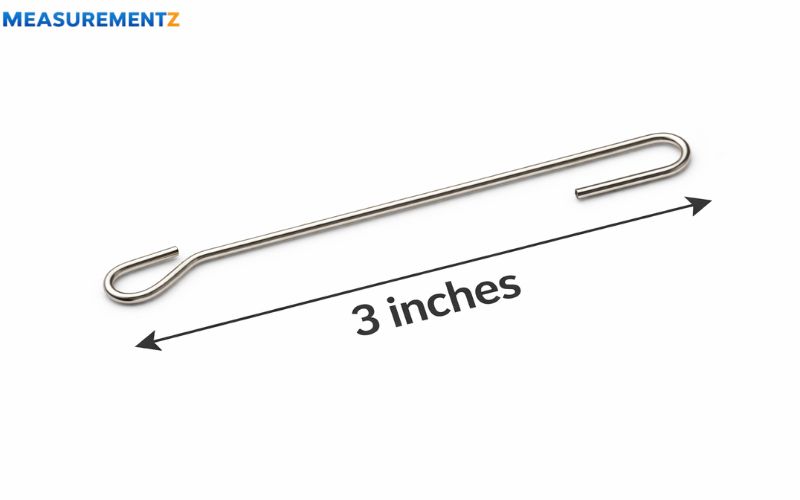
A large paper clip, when fully unfolded and straightened, measures close to 3 inches long. Paper clips are common in offices, schools, and homes, making them an accessible comparison tool for short measurements.
The advantage of this example lies in its linear shape. Once unfolded, the thin metal wire creates a straight line that closely resembles the look of a ruler marking. This makes it useful for checking narrow gaps, measuring short edges, or comparing object lengths quickly.
Paper clips are also frequently used in demonstrations because they are simple and familiar. Their flexibility allows them to adapt to small spaces, making them especially useful for estimating length in tight or irregular areas where a ruler may not fit easily.
Because paper clips are inexpensive and disposable, they are often used in quick checks where precision is not critical. For example, they can help confirm whether a gap, opening, or edge is close to 3 inches before using proper tools. This makes them surprisingly useful in temporary or on-the-go situations.
3. Adult Thumb Length
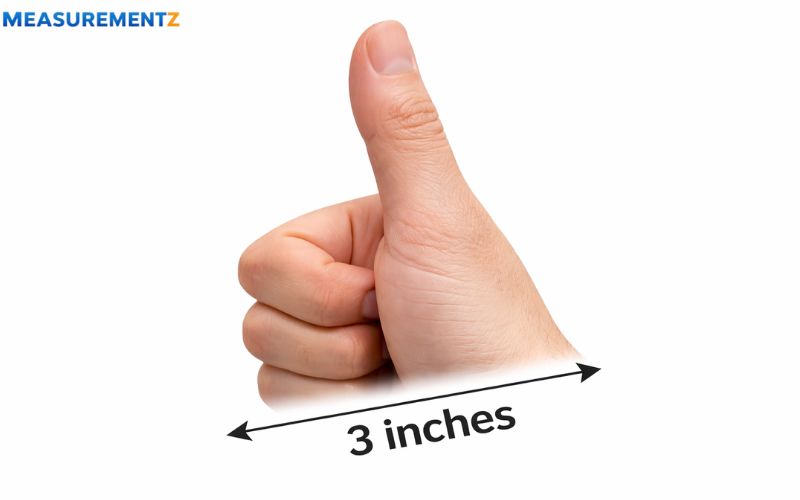
For many adults, the distance from the base of the thumb to the tip measures around 3 inches. While hand size varies from person to person, this approximation is accurate enough for general estimation.
This reference is widely used in informal measuring situations such as woodworking, home repairs, crafting, packaging, and basic layout planning. Because the thumb is always available, it becomes a natural measuring guide when tools are not nearby.
Although thumb length should not replace a ruler for precise measurements, it is useful for judging spacing, proportions, and approximate lengths. Over time, many people develop a strong sense of scale using their own hand as a reference.
This method is especially common in trades and hands-on work where speed matters. While it lacks precision, it helps avoid major sizing errors during early planning stages. Many experienced workers rely on body-based references like thumb length to make fast decisions before final measurements are taken.
4. Three Matchsticks Aligned
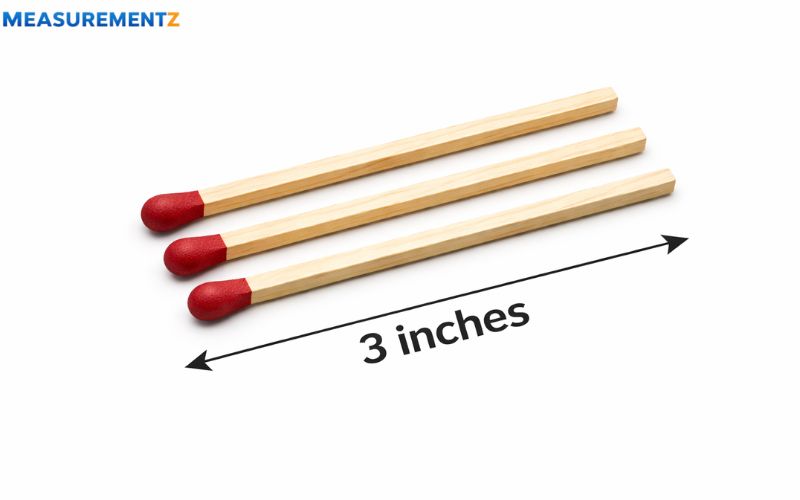
A single matchstick is typically about 2 inches long. When three matchsticks are aligned with slight overlap, their combined visible length is close to 3 inches.
Matchsticks are lightweight, straight, and uniform, which makes them useful for basic measurement demonstrations. Aligning them helps show how smaller units combine to create a larger length.
This comparison is often used in educational settings because it clearly demonstrates scale and proportion. It also works well in everyday situations where matchsticks are available and measuring tools are not.
This example also highlights how perception can change with arrangement. Individually, matchsticks feel short, but aligning them creates a length that feels more substantial. This helps explain why people often underestimate 3 inches until it is shown using familiar objects placed together.
5. Standard USB Flash Drive
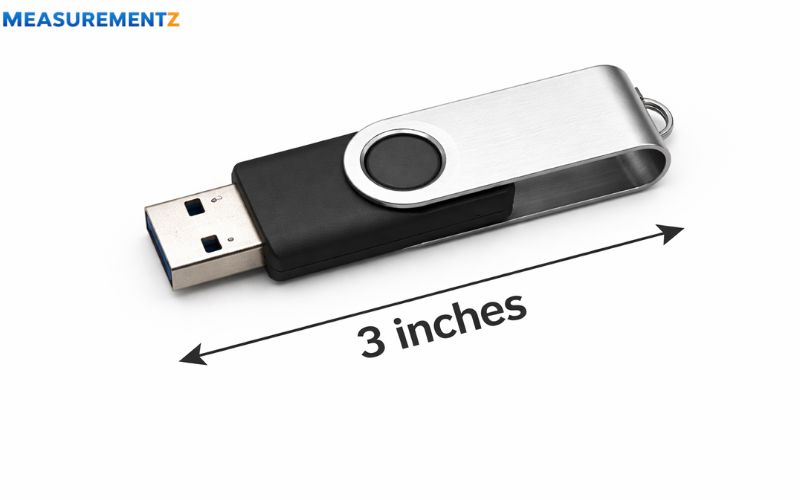
Many USB flash drives are designed to be around 3 inches long. This length provides a balance between portability and usability.
Manufacturers choose this size so the drive is easy to grip, insert, and remove without being bulky. Shorter designs can be difficult to handle, while longer ones reduce portability.
Because USB drives are straight, solid, and familiar to most people, they provide a clear and modern reference for visualizing the length of 3 inches.
When shopping for accessories such as protective cases or organizers, understanding the typical length of a USB drive helps avoid sizing mistakes. Many compact storage solutions are designed around this measurement, making it a useful benchmark when evaluating small tech products.
6. Small Pocket Knife (Closed)
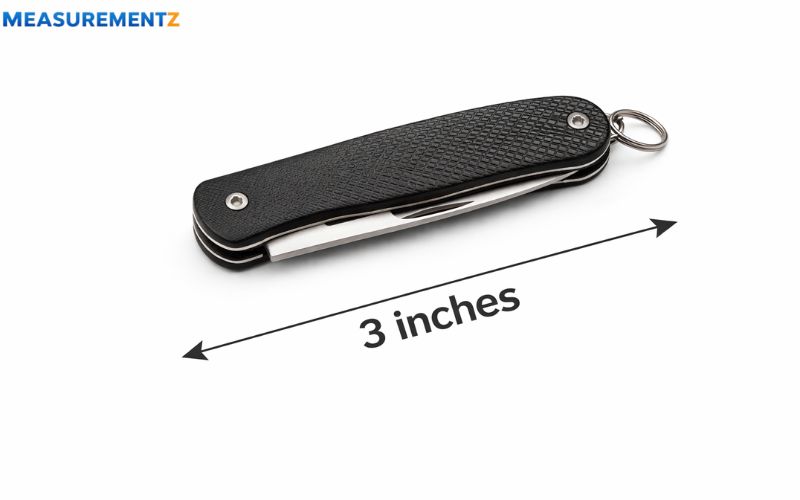
A compact pocket knife, when closed, commonly measures about 3 inches. This size allows the knife to remain safe, portable, and functional.
Knives of this length fit comfortably in pockets, tool bags, or emergency kits. The design reflects how 3 inches is often used as a standard for compact tools that must remain easy to carry.
This example shows how manufacturers rely on this measurement to balance convenience with practical utility.
This length also aligns with many safety and carry regulations for compact tools. Manufacturers often stay near the 3-inch range to ensure broad usability while maintaining compliance. This reinforces how frequently this measurement is used as a practical standard.
Related Post: How Long Is 2 Inches?
7. Teaspoon Handle
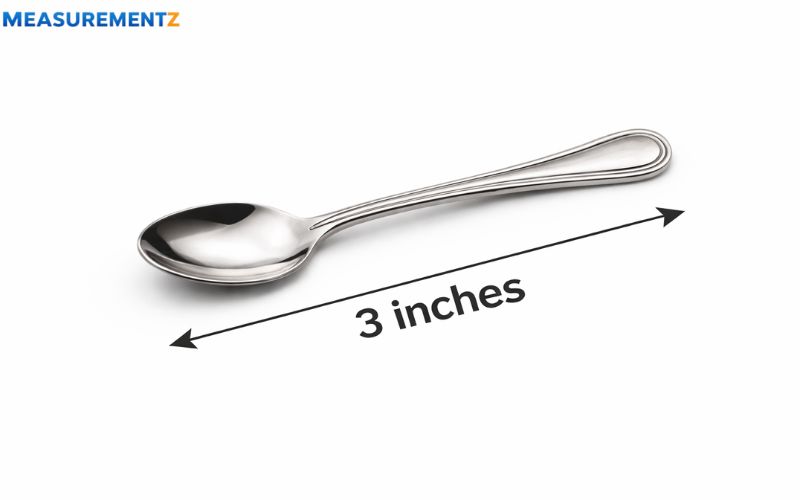
The handle portion of a standard teaspoon measures approximately 3 inches long. While the full spoon is longer, the handle itself aligns closely with this measurement.
This length ensures comfort and control during use. Utensil designers carefully consider handle size to provide balance without overcrowding drawers or utensil holders.
Because teaspoons are used daily, this reference helps reinforce what 3 inches feels like during routine activities.
This measurement also affects storage efficiency. Drawers, utensil trays, and organizers are designed with these proportions in mind. Recognizing this helps explain why many small kitchen tools feel similar in size and balance.
8. Golf Tee
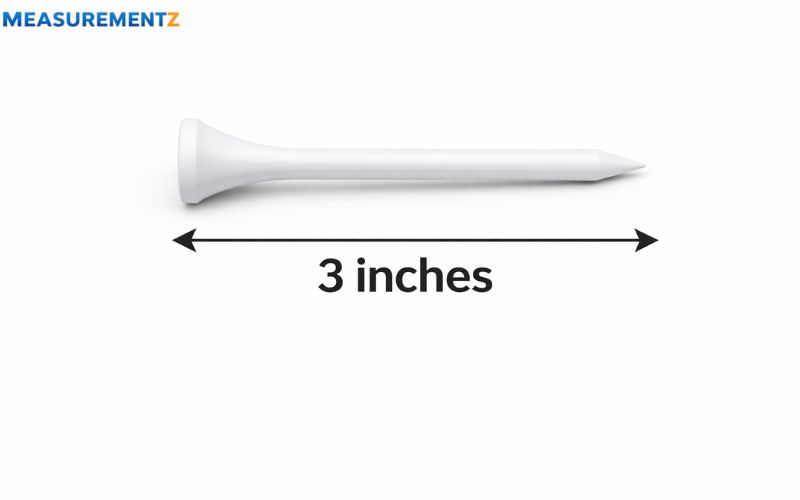
A standard golf tee measures about 3 inches in length. This measurement is consistent across manufacturers to ensure proper ball height and stability.
The straight, narrow shape of a golf tee makes its length easy to observe and compare. It demonstrates how precise measurements affect performance in sports equipment.
Golf tees are produced to exact specifications, making them a reliable and consistent reference.
For non-golfers, the tee still provides a clean example of a controlled, purpose-driven size. Its consistency makes it useful when explaining measurements to others, especially when accuracy matters more than rough estimation.
9. Small Decorative or Birthday Candle
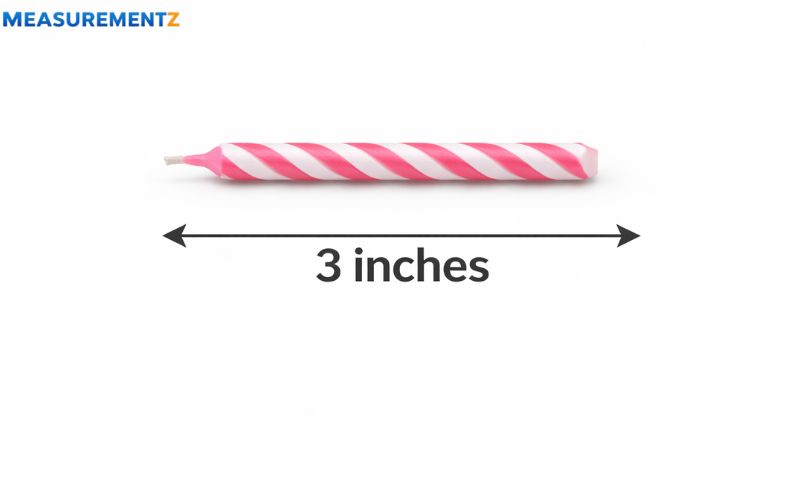
Many decorative and birthday candles measure approximately 3 inches tall. This height allows for steady burning while remaining visually balanced.
Candles provide a useful example of 3 inches as a vertical measurement. When placed on cakes or holders, the size is noticeable but not overwhelming.
This reference helps visualize height rather than length alone, adding variety to size comparisons.
This size is also chosen for safety and presentation. Taller candles may drip excessively or become unstable, while shorter ones burn too quickly. The 3-inch height represents a balance between function, appearance, and ease of use.
10. Bottle Cap Width (Laid Flat)
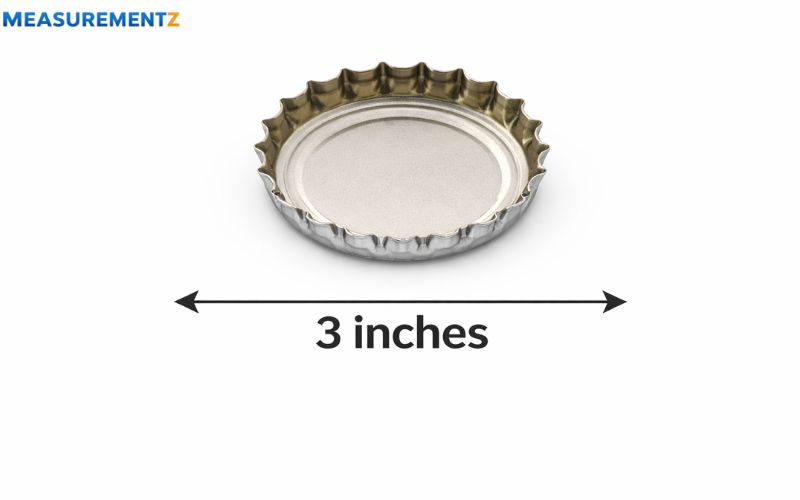
When laid flat and measured across, a standard bottle cap measures close to 3 inches, including the outer ridges.
While exact dimensions vary slightly by brand, bottle caps are familiar objects that offer a practical size reference.
This example shows how 3 inches appears across a circular object, which differs visually from straight-line measurements.
Bottle caps are especially helpful because they are mass-produced and familiar. Even when brands differ slightly, the overall scale remains consistent enough to provide a dependable visual reference for short distances.
11. Three Coins Side by Side
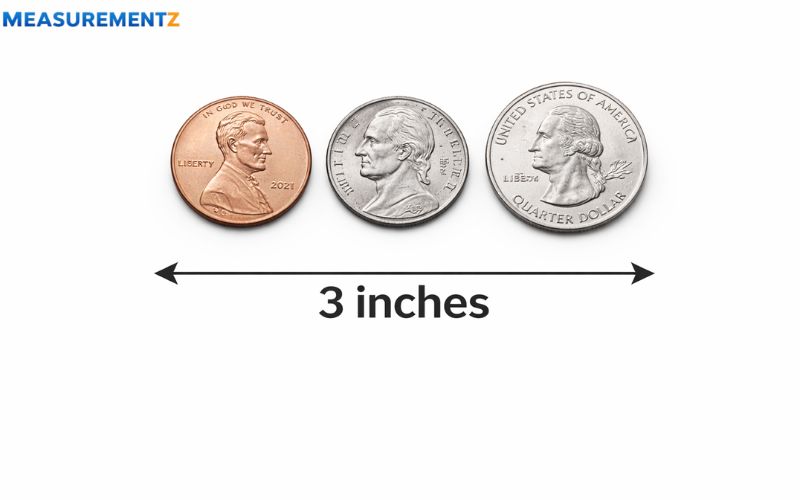
Placing three standard coins side by side results in a combined length close to 3 inches.
Coins are uniform, rigid, and easy to align, making them effective for quick demonstrations. This method is often used in basic teaching environments.
Using coins reinforces measurement concepts through hands-on comparison without requiring tools.
This approach is particularly effective when explaining measurements to beginners. Coins provide immediate physical feedback, helping reinforce what 3 inches feels like rather than just what it looks like on paper.
12. Smartphone Camera Module Area
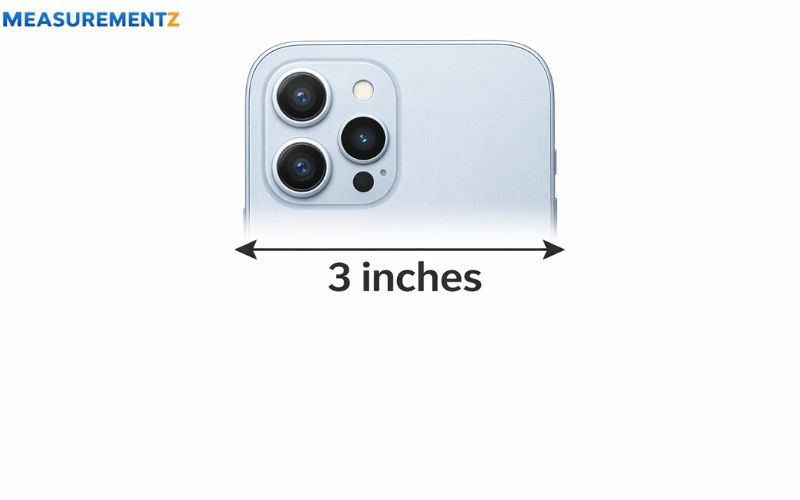
On many modern smartphones, the combined camera module area measures around 3 inches across.
This example highlights how compact measurements play a major role in modern device design. Engineers carefully manage space to fit advanced components into small areas.
Relating measurements to phone components helps connect traditional sizing concepts with everyday technology.
This comparison also reflects how space constraints influence design decisions. Engineers work within tight limits, and knowing the approximate size helps users better understand why certain phone designs look the way they do.
13. Ruler Mark from 0 to 3 Inches
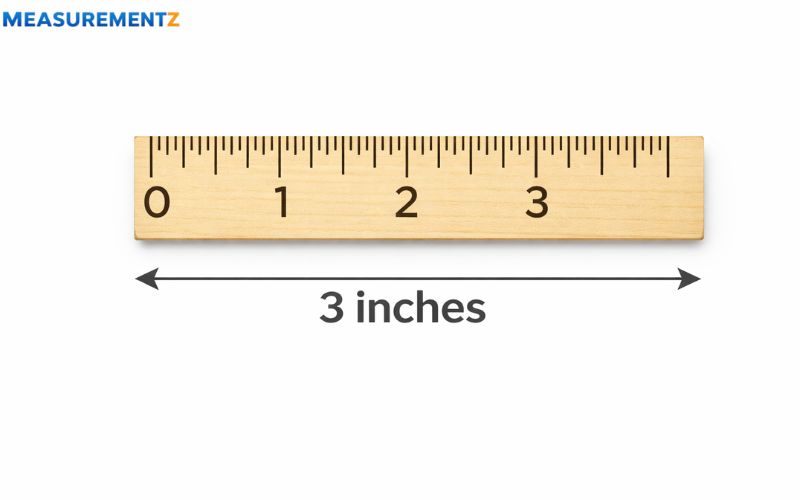
The most accurate reference for this measurement is the distance from 0 to 3 inches on a ruler.
Using a ruler confirms visual estimates and improves long-term accuracy. Regular exposure helps train the eye to recognize this length more precisely.
This reference serves as the baseline for all other comparisons.
Developing familiarity with this ruler segment improves long-term estimation skills. Over time, frequent reference reduces reliance on tools and increases confidence when judging small measurements in everyday situations.
Frequently Asked Questions (FAQs)
How long is 3 inches exactly?
Three inches is exactly 7.62 centimeters. On a standard ruler, it is the distance from the zero mark to the number three. It is long enough to be clearly visible and useful, yet small enough to fit easily in one hand or pocket. This measurement is commonly used for compact objects, tools, and accessories.
Is 3 inches considered small?
Yes, 3 inches is generally considered a small measurement. However, it is not insignificant. Many everyday items are designed around this size because it offers a balance between compactness and usability. Objects that need to be portable but still functional often fall near this length.
How can I measure 3 inches without a ruler?
You can estimate 3 inches using common objects such as the width of a credit card, the length of an adult thumb, a standard USB flash drive, or a golf tee. While these methods are not perfectly precise, they are accurate enough for everyday use and quick checks.
Why is 3 inches used so often in product design?
Manufacturers frequently use 3 inches because it is a practical, human-scale measurement. It fits comfortably in the hand, works well for small tools and components, and aligns with existing standards such as card widths and compact accessories. This makes it ideal for consistent design.
Can visual estimates of 3 inches be trusted?
Visual estimates are reliable for general tasks but should not replace precise tools for critical measurements. Familiarity with common 3-inch objects improves accuracy over time, reducing major errors during everyday sizing decisions.
Final Thoughts
Three inches may seem small, but it plays a major role in everyday life. From household items and tools to packaging and technology, this measurement appears repeatedly because it is practical, efficient, and easy to work with.
By connecting 3 inches to familiar objects, estimating size becomes faster and more reliable. These real-world references reduce guesswork and help ensure better decisions when measuring, buying, or comparing small items.
