
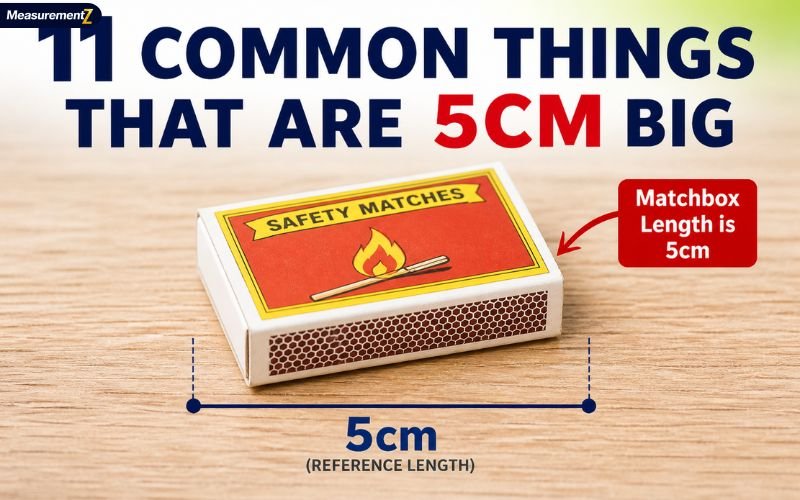
5 cm is equal to 50 mm or about 1.97 inches (almost 2 inches). This is a small but useful length you see in daily life. It is close to the width of a few fingers or the size of many small objects.
To picture it quickly, 5 cm is just a little less than 2 inches. If you have read about 2 inches, then you already have a very close idea of how big 5 cm looks.
How Big Is 5cm? (Simple Explanation)
When people ask “how big is 5cm”, they usually want a clear mental picture.
5 cm is not very large. It fits easily in your hand. It is about the width of two adult fingers placed side by side. This size is common in small objects like coins, caps, and everyday tools.
In inches, 5 cm is almost 2 inches. So if you imagine something that is slightly smaller than 2 inches, you are very close. Many people already understand sizes like 3 inches or 4 inches, so think of 5 cm as smaller than those.
This measurement is useful in daily life. It helps when checking small items, measuring objects, or understanding product sizes. For example, many phone parts, accessories, and small household items fall near this size.
A simple way to remember:
5 cm = small, hand-sized, easy to hold, and just under 2 inches.
Measurement Without a Ruler
You can estimate 5 cm without tools using simple methods:
1. Using Your Fingers
Place two fingers together (index and middle).
Their combined width is close to 5 cm for most adults.
2. Using Your Thumb
The width of a thumb is about 2–2.5 cm.
So, two thumb widths ≈ 5 cm.
3. Using Common Objects
- A large coin
- A small matchbox
- A bottle cap
These can help you guess 5 cm quickly.
Quick Comparison Table
| Item Name | Size in Inches |
| Matchbox Length | ~2 inches |
| Large Bottle Cap | ~2 inches |
| Golf Ball Diameter | ~1.7 inches |
| Soap Bar Thickness | ~2 inches |
| Small Candle Height | ~2 inches |
| Lemon Diameter | ~2 inches |
| USB Flash Drive | ~2 inches |
| Chalk Piece Length | ~2 inches |
| Key Length | ~2 inches |
| Small Toy Car Width | ~2 inches |
| Eraser Length | ~2 inches |
1. Matchbox Length
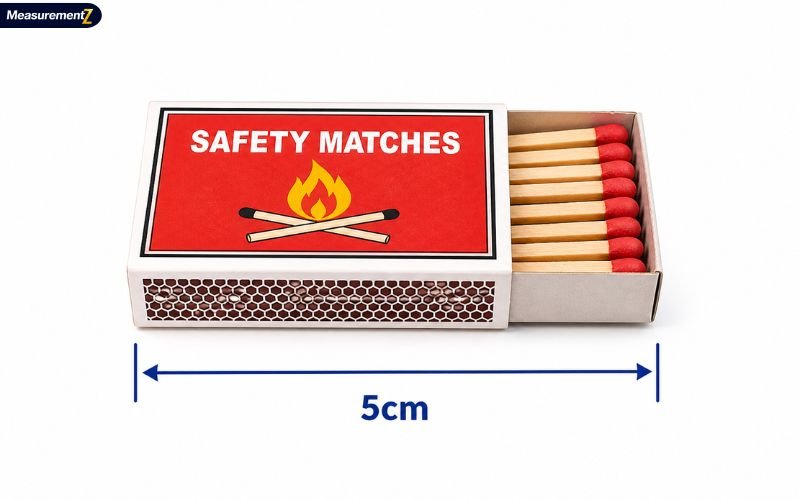
A standard matchbox is a great example of something close to 5 cm long. It fits easily in your pocket and is simple to hold with one hand. The length of many small matchboxes is about 5 cm, making them a perfect real-life reference.
When you pick up a matchbox, notice how it sits between your fingers. That compact size is exactly what 5 cm feels like. It is not too small to lose easily, but not large enough to feel bulky.
This example is useful because matchboxes are common in many homes. If you compare it with measurements like 2 inches, you will see that the size is very close. This helps you quickly understand how big 5 cm looks without measuring tools.
A matchbox also shows how practical this size is. Many small items are designed around this length because it is easy to store and carry.
2. Large Bottle Cap
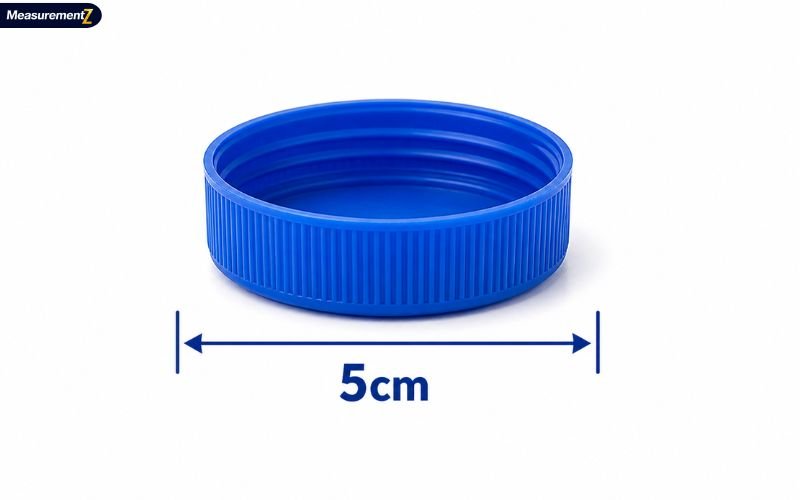
A large bottle cap, especially from a water bottle or soft drink, is close to 5 cm in diameter. When you hold one, you can see how small but noticeable this size is.
This is a very helpful example because bottle caps are everywhere. You can pick one up and instantly understand the size of 5 cm. It fits perfectly between your fingers and is easy to rotate.
Compared to 3 inches, a bottle cap is smaller, which helps you understand the scale better. It gives a clear idea of how compact 5 cm really is.
This size is common in packaging because it is easy to grip and open. That is why many lids and caps are designed around this measurement.
Related Post: 12 Common Things That Are 4 Centimeters Big
3. Golf Ball Diameter
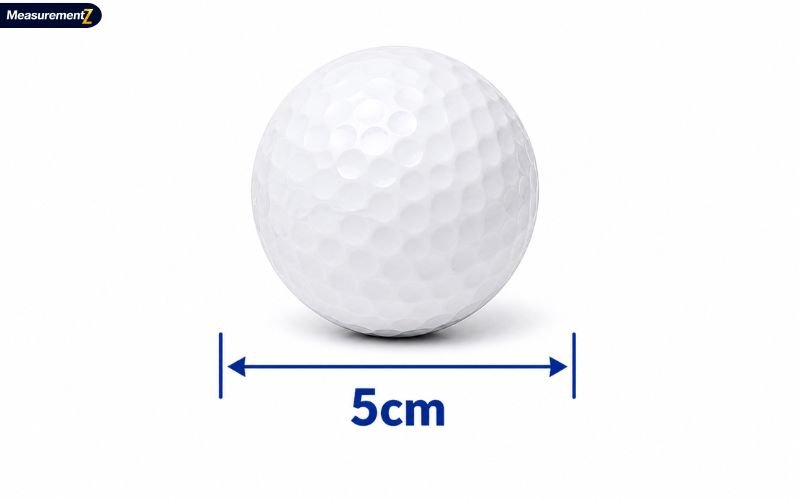
A golf ball has a diameter of about 4.3 cm, which is very close to 5 cm. This makes it a useful object for visualizing the size.
When you hold a golf ball, it fills your palm slightly but still feels small. That rounded shape helps you understand how 5 cm looks in three dimensions.
If you have seen objects around 4 inches, you will notice that a golf ball is much smaller. This comparison makes it easier to picture 5 cm accurately.
Golf balls are designed to be easy to hold and control, which is why their size is close to this measurement.
4. Soap Bar Thickness
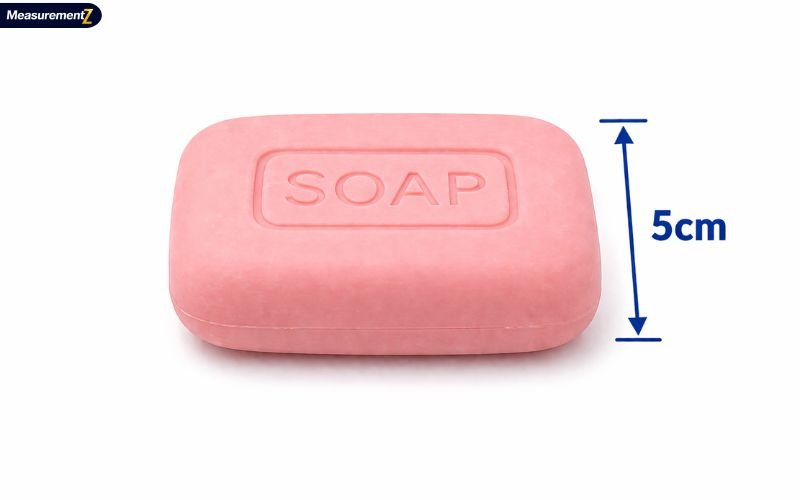
Many small soap bars have a thickness of around 5 cm. When you grip one, you can feel the width clearly in your hand.
This example is useful because soap is something we use daily. The thickness shows how 5 cm feels when you hold something solid.
Compared to larger sizes like 6 inches, this thickness is much smaller and easier to manage. It fits comfortably in one hand without slipping.
Soap bars are made this size so they are easy to hold while washing. This makes them a practical example of 5 cm.
5. Small Candle Height
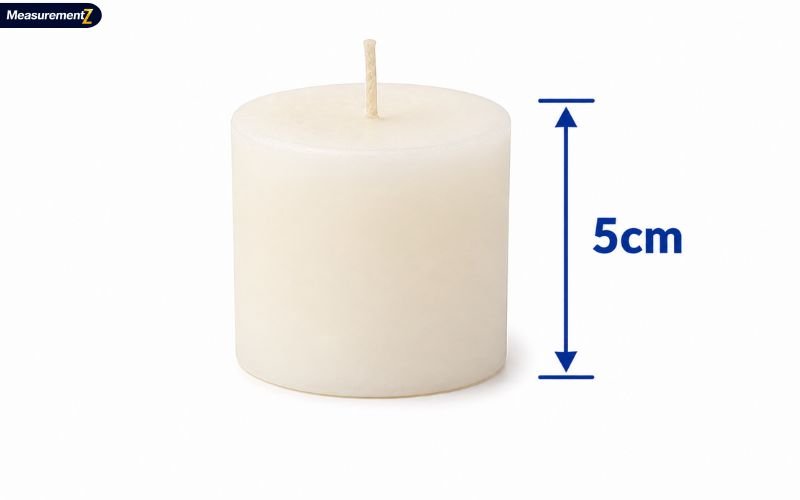
A small decorative candle is often about 5 cm tall. These candles are used for decoration or short-term lighting.
When you place one on a table, you can clearly see how short 5 cm is. It is noticeable but still quite small.
If you have read about 2 inches examples, this is a perfect match. The candle gives a real-life visual that is easy to remember.
This size is popular because it is compact and safe for small spaces.
6. Lemon Diameter
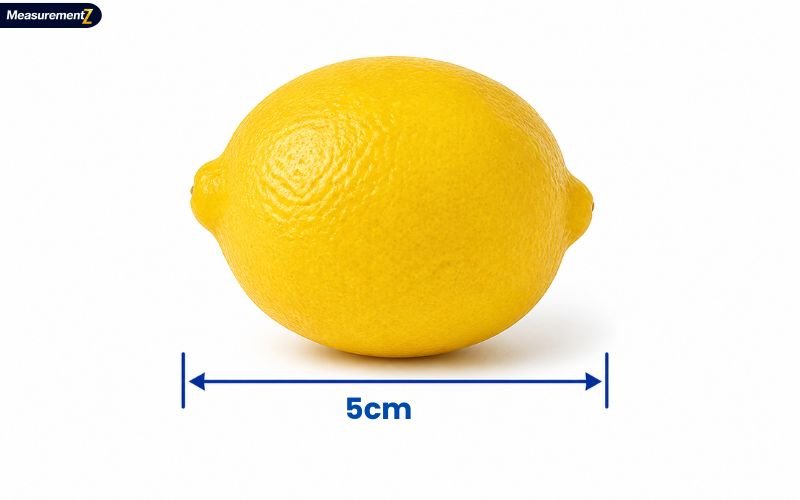
A small lemon is often close to 5 cm in diameter. When you hold it, it fits comfortably in your palm.
This is a natural example that helps you understand size without tools. Fruits are great for comparison because they are easy to find.
Compared to 4 inches, a lemon is smaller and easier to grip. This makes it a good reference for 5 cm.
The round shape also helps you visualize how 5 cm looks from all sides.
Related Post: 10 Common Things That Are 3 Centimeters Big
7. USB Flash Drive Length
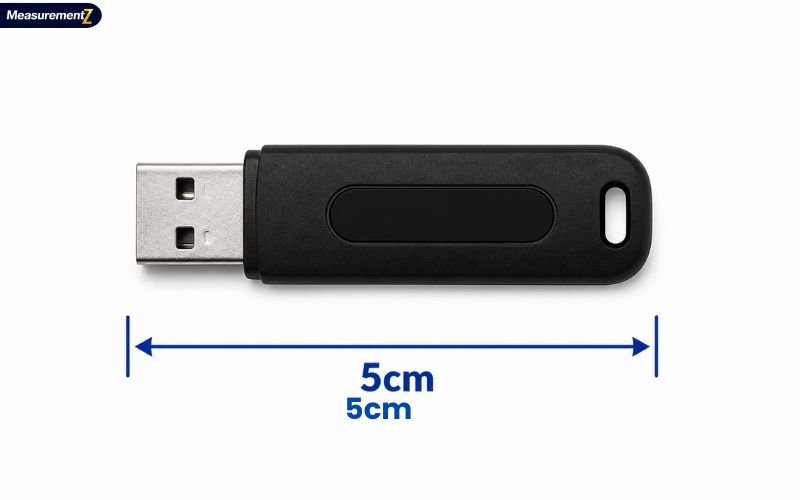
Most USB flash drives are around 5 cm long. This makes them easy to carry and store.
When you plug one into a computer, you can see how compact it is. This is a perfect modern example of 5 cm.
If you compare it with 3 inches, you will notice it is slightly smaller, which matches the 5 cm size closely.
USB drives are designed this way so they are portable and convenient.
8. Chalk Piece Length
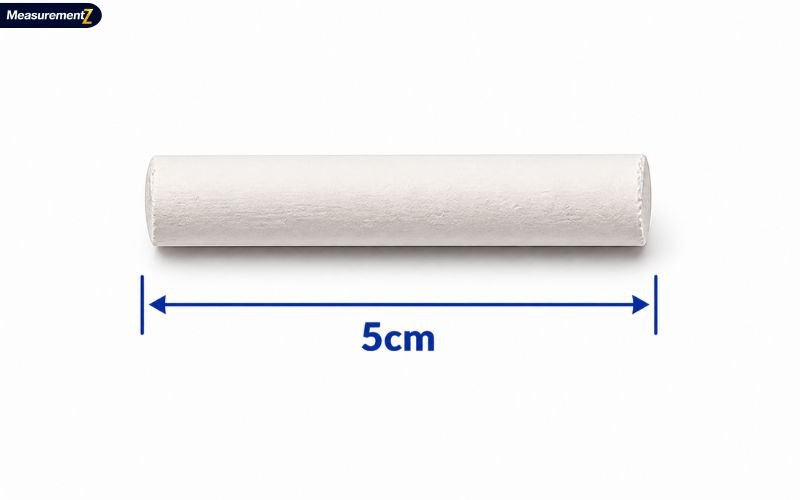
A standard piece of chalk is often about 5 cm long when new or slightly used. It is easy to hold between your fingers.
This example is useful for students and teachers. It shows how 5 cm feels during everyday tasks.
Compared to 2 inches, chalk length is almost the same, making it a clear reference.
Its small size makes writing comfortable and controlled.
9. Key Length
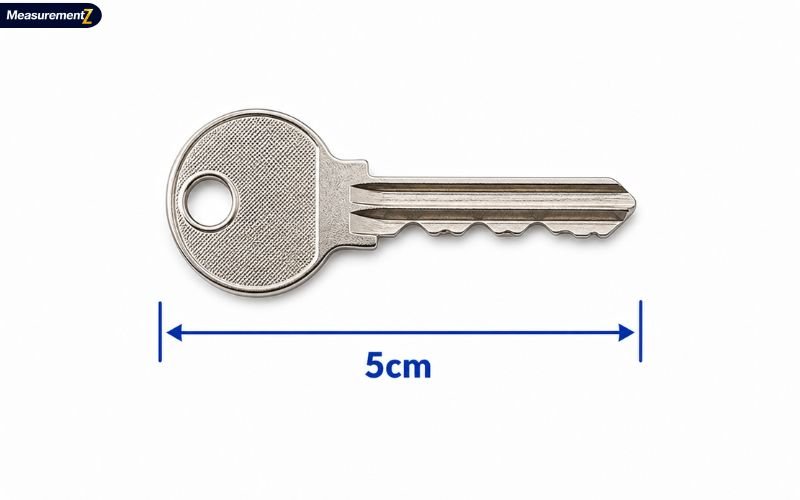
A typical house key is about 5 cm long. When you hold it, you can clearly feel this measurement.
Keys are perfect for understanding size because we use them daily. They are small but not too tiny.
If you think about 3 inches examples, keys are shorter, which helps you understand 5 cm better.
Their size is designed for easy carrying and use.
10. Small Toy Car Width
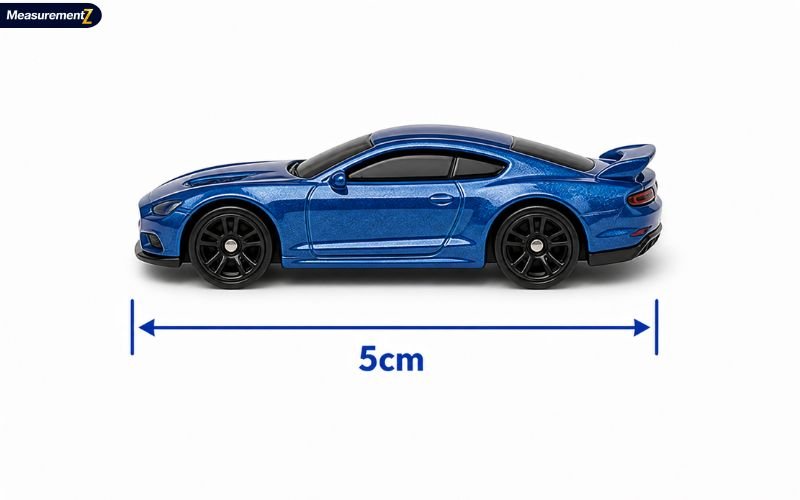
A small toy car is often around 5 cm wide. This is common in children’s toys.
When you hold one, it fits easily in your hand. This gives a clear idea of how wide 5 cm is.
Compared to larger toys around 6 inches, this size is much smaller and more compact.
It is a fun and simple way to understand measurements.
11. Eraser Length
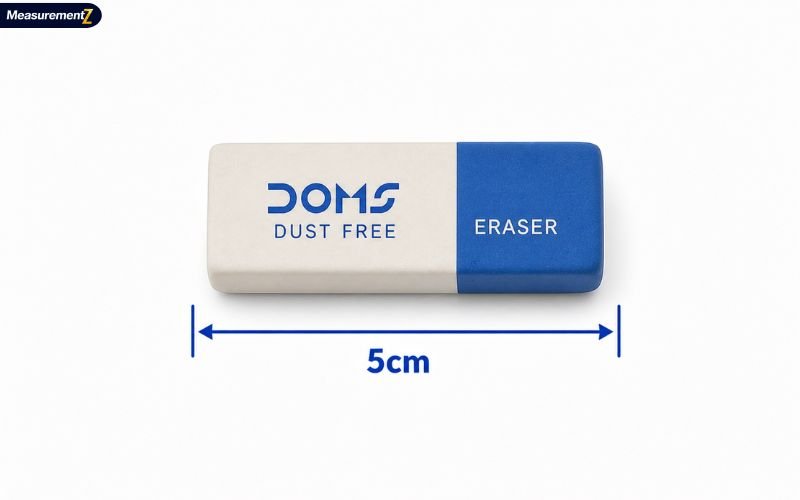
A small eraser is usually about 5 cm long. It is easy to carry in a pencil case.
This is one of the most common examples. Almost everyone has used an eraser of this size.
If you compare it with 2 inches, you will see they are very close. This makes it a reliable reference.
Erasers are made this size for easy handling and precise use.
Related Post: 10 Common Things That Are 2 Centimeters Long/Big
FAQs
Is 5 cm exactly 2 inches?
No. 5 cm is about 1.97 inches, which is slightly less than 2 inches.
What does 5 cm look like?
It looks like the width of two fingers or the length of a small object like a key or matchbox.
How can I measure 5 cm without a ruler?
Use your fingers, thumb widths, or compare with common objects like a USB drive or bottle cap.
Is 5 cm considered small?
Yes. It is a small size that fits easily in your hand.
Conclusion
5 cm is a small and practical measurement equal to about 1.97 inches or 50 mm. It appears in many everyday objects like keys, matchboxes, and USB drives. By using simple comparisons and common items, you can easily understand and estimate this size without a ruler. Once you connect it with familiar objects, recognizing 5 cm becomes quick and natural.
